This blog is currently using Hexo + the OpenCode theme.
Initially, I just wanted a lightweight theme instead of those flashy template sites. Later, I came across the OpenCode terminal style, which looked pretty good—black and white, monospace fonts, and a relatively clean structure, so I decided to use it for now.
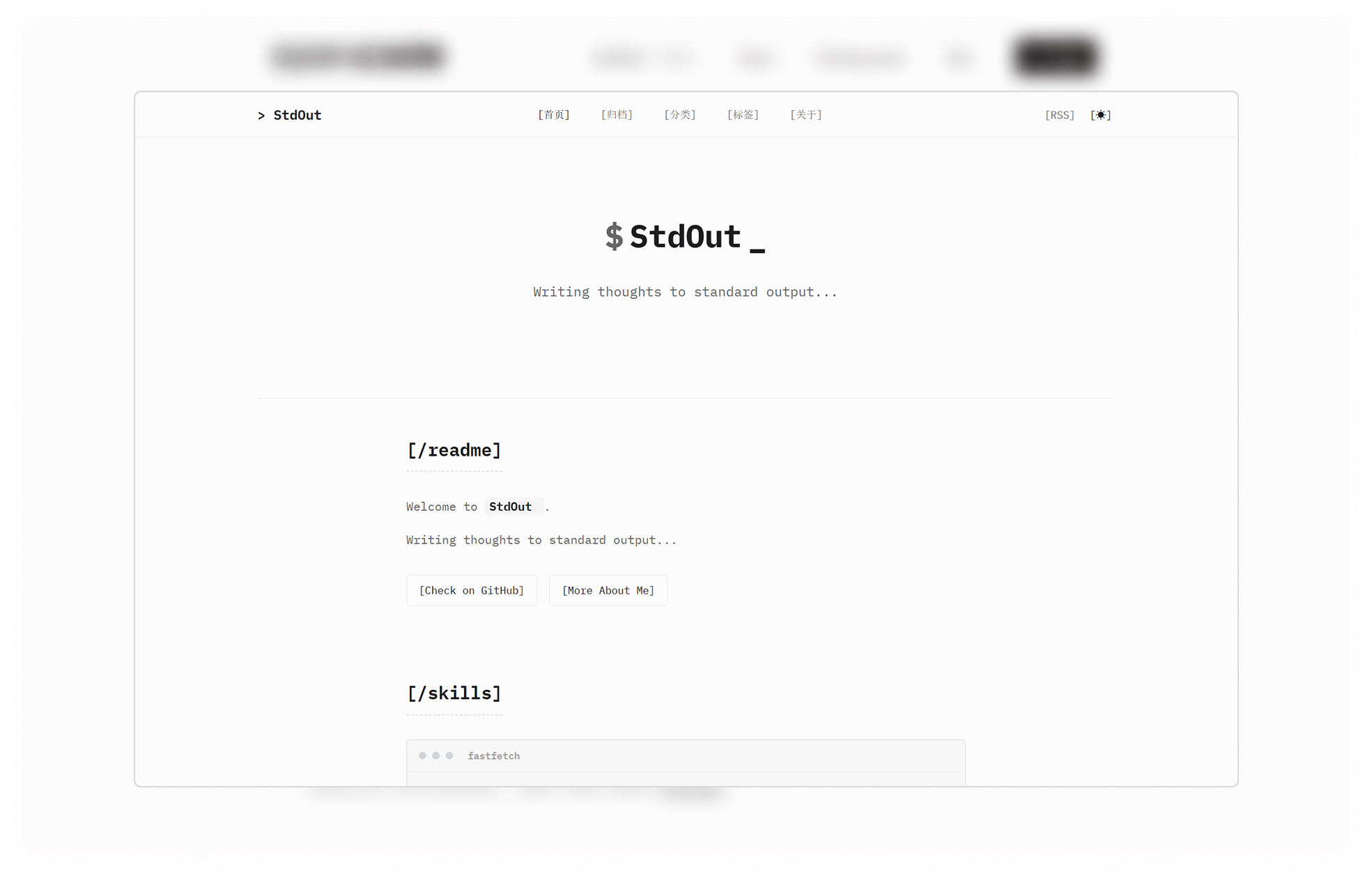
Why I use this theme
Mainly for a few reasons:
- The pages are clean and don't distract from the article content.
- Monospace fonts make reading code comfortable.
- The black and white style is timeless and doesn't easily cause aesthetic fatigue.
- The structure is simple, making future modifications relatively easy.
Some themes look dazzling at first glance, but when you actually write articles, they become a mess: too many cards, chaotic colors, and a bunch of animations. They look less like blogs and more like landing pages for selling courses.
This one, at least, isn't that abstract.
Current state
Currently, the blog mainly hosts these contents:
- Logs of tinkering with networks and servers.
- Linux, scripts, and command cheat sheets.
- Notes on tool deployment and troubleshooting pitfalls.
- Later, I might post about AI coding, websites, and automation.
The writing doesn't have to be too formal; as long as it's understandable and reproducible, that's fine.
Code block effect
Command blocks look roughly like this:
npm install
npm run build
Regular code blocks:
function log(message) {
  console.log(`[stdout] ${message}`)
}

log('hello opencode')
Potential future tweaks
The theme is usable, but it's not like I won't touch it at all.
I'll probably tweak these things:
- Make the homepage article list a bit more compact.
- Adjust Chinese typography details.
- Ensure category and tag pages aren't too empty.
- Rewrite the code block copy button if it doesn't work well.
- Continue fixing things that look off on mobile.
Get it running first, then slowly tweak it.
Conclusion
Right now, this site just serves as my personal technical notes.
Writing articles isn't about pretending to be professional; it's mostly to prevent forgetting how to configure things next time. If I can document the pitfalls, the effort wasn't wasted.